

Audience : SOC Analysts, Security Engineers, Detection Engineers, MSSPs, Security Operations Leaders
Product Module : Securonix Unified Defense SIEM | Agentic Mesh
Last Updated : May 21, 2026
KB ID : KB-20260521-agentic-mesh-overview
Tags : Agentic Mesh, SAM, AI SOC Analyst, Response Agent, Search Agent, Search Insights, Noise Control, Policy Agent, Insider Intent, SOC Operations
Table of Contents
Getting Started with Agentic Mesh
SAM, the AI SOC Analyst, is built into the Agentic Mesh investigation experience inside Security Alert Center. It helps analysts move through investigations more efficiently by coordinating AI-assisted workflows across triage, search, investigation, response, reporting, and signal-quality review.
Organizations typically begin by enabling SAM-driven investigation workflows so analysts can work from a shared, governed investigation environment with improved context and fewer workflow interruptions. Agentic Mesh includes multiple specialized AI agents designed to support different operational workflows across the SOC.
These include:
-
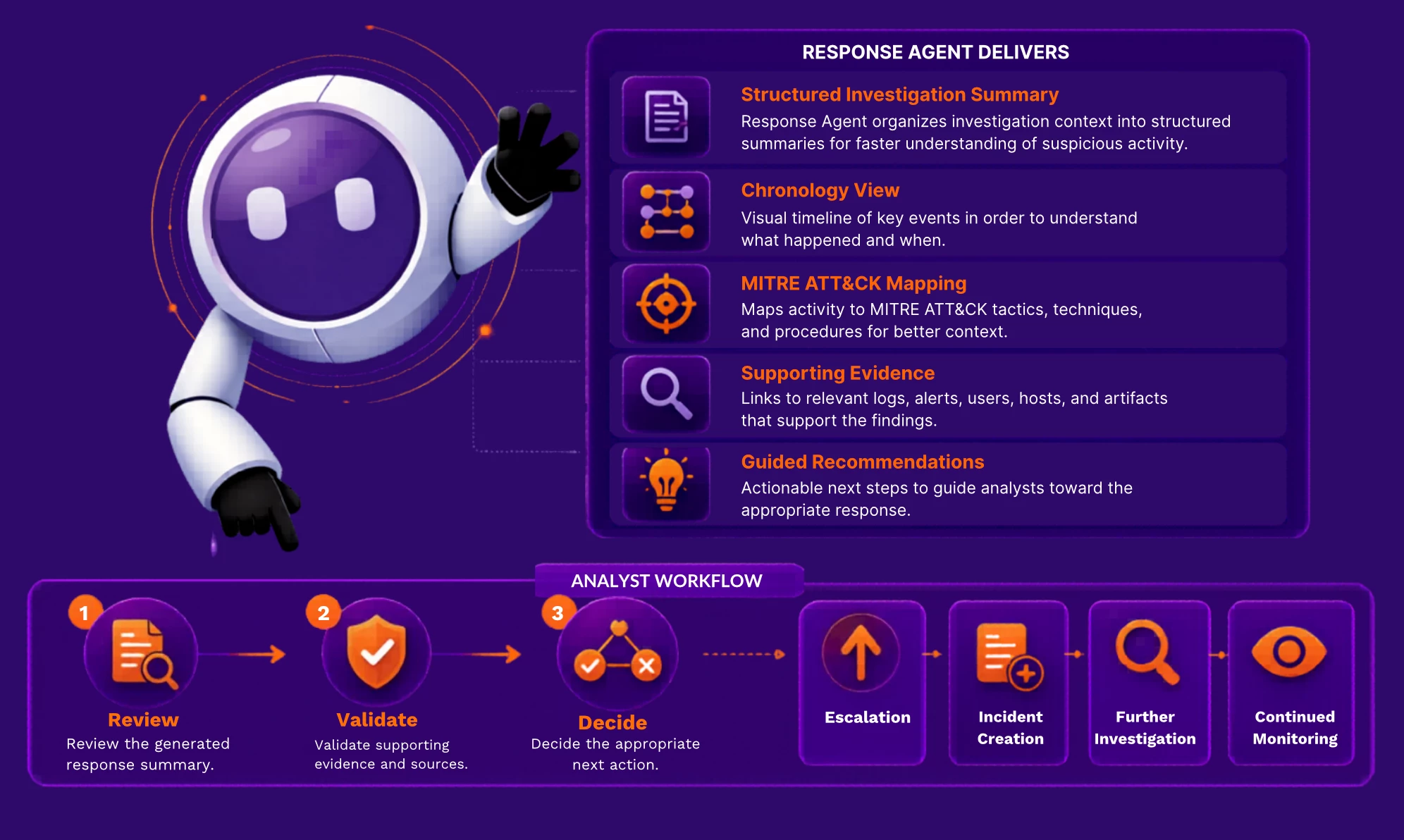
Response Agent for investigation summarization and guided response workflows
-
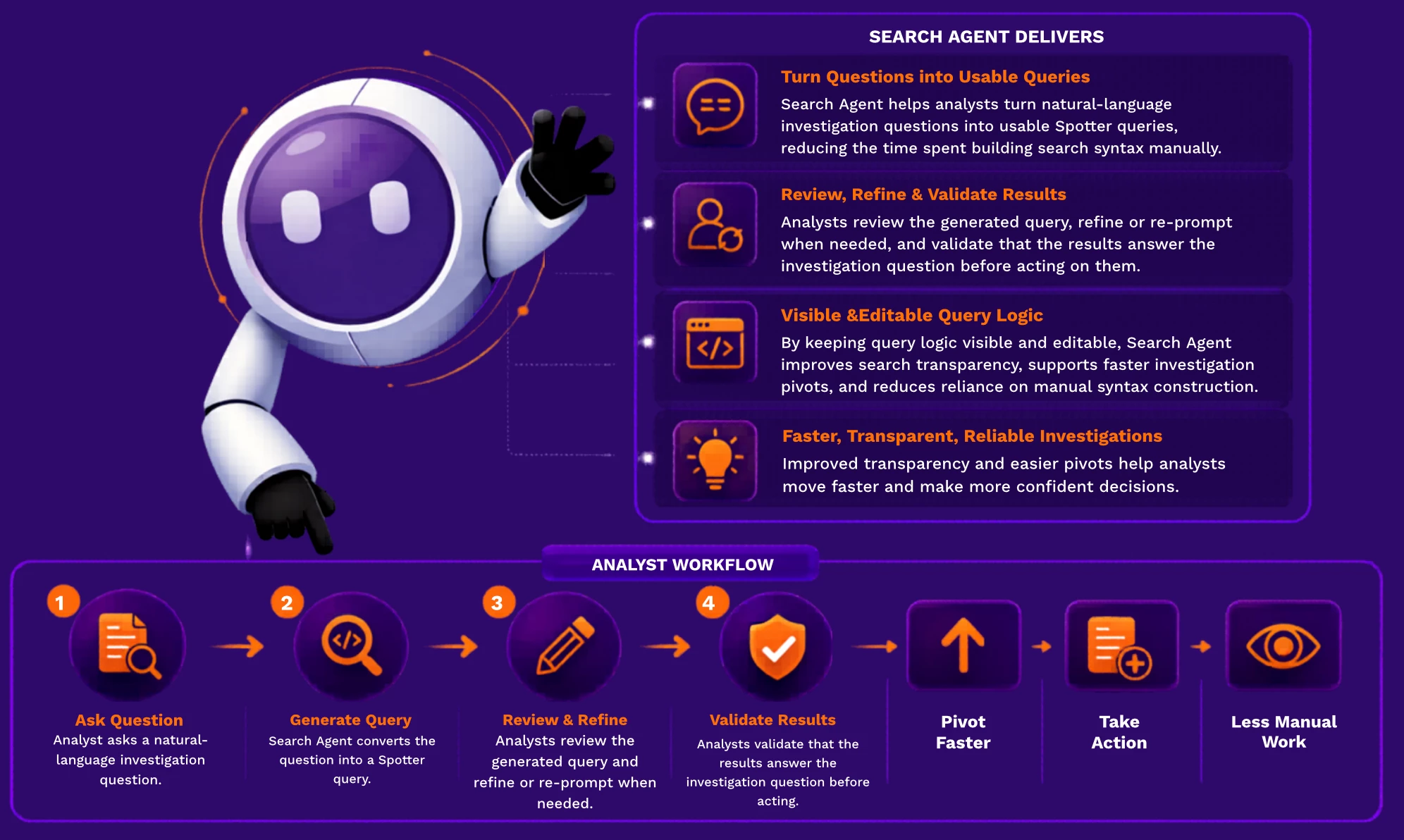
Search Agent for natural-language Spotter query generation
-
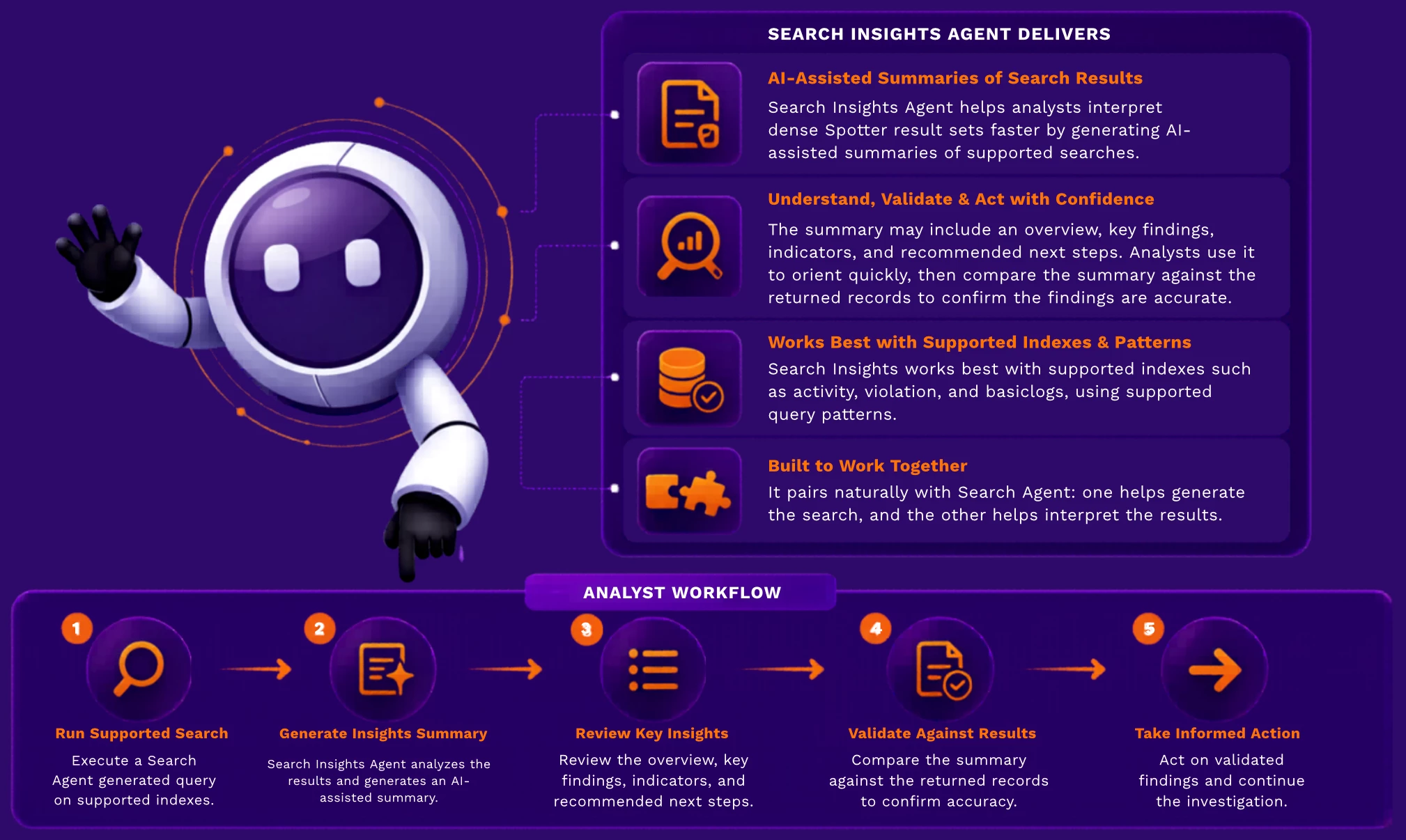
Search Insights Agent for AI-assisted search-result interpretation
-
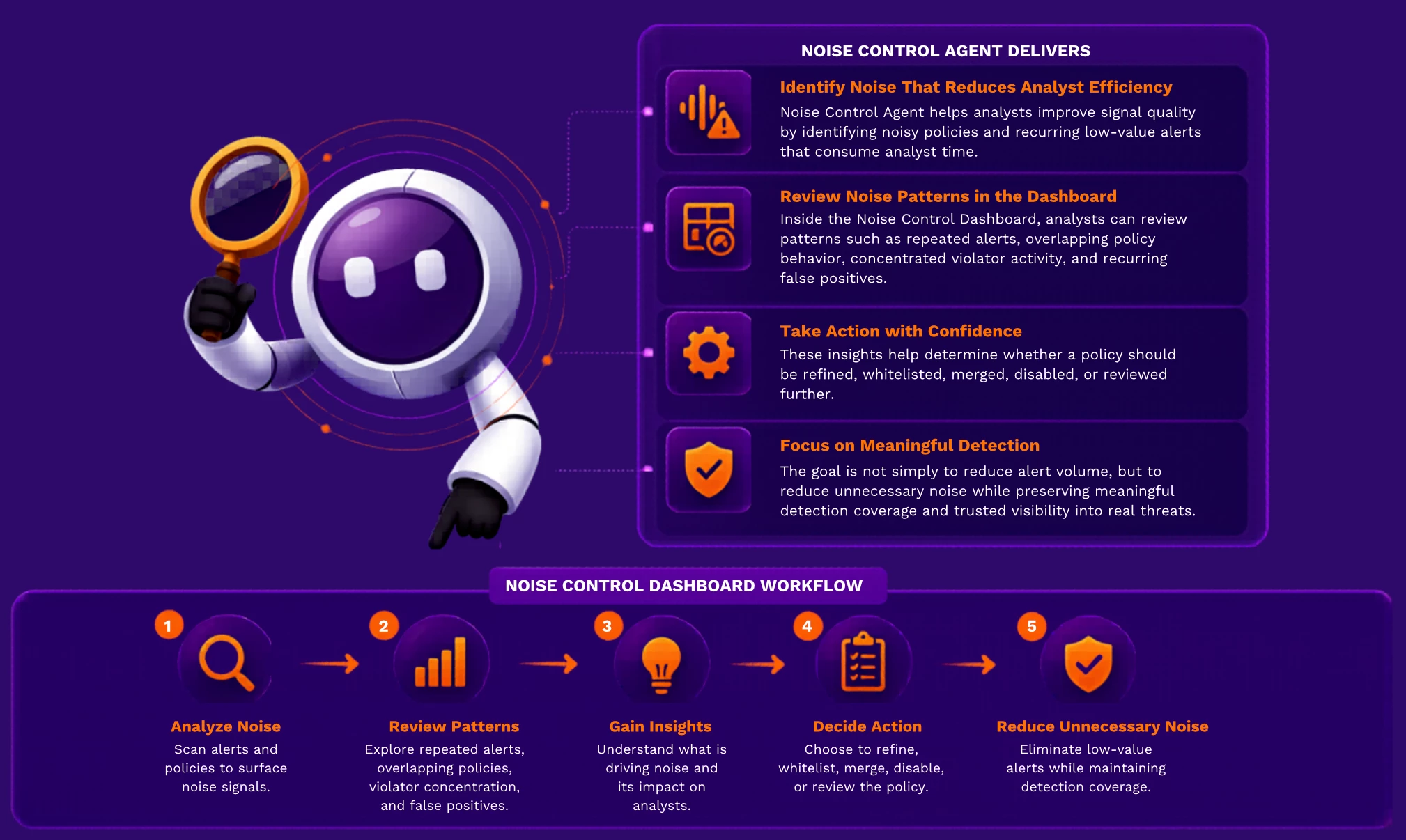
Noise Control Agent for signal-quality and tuning analysis
-
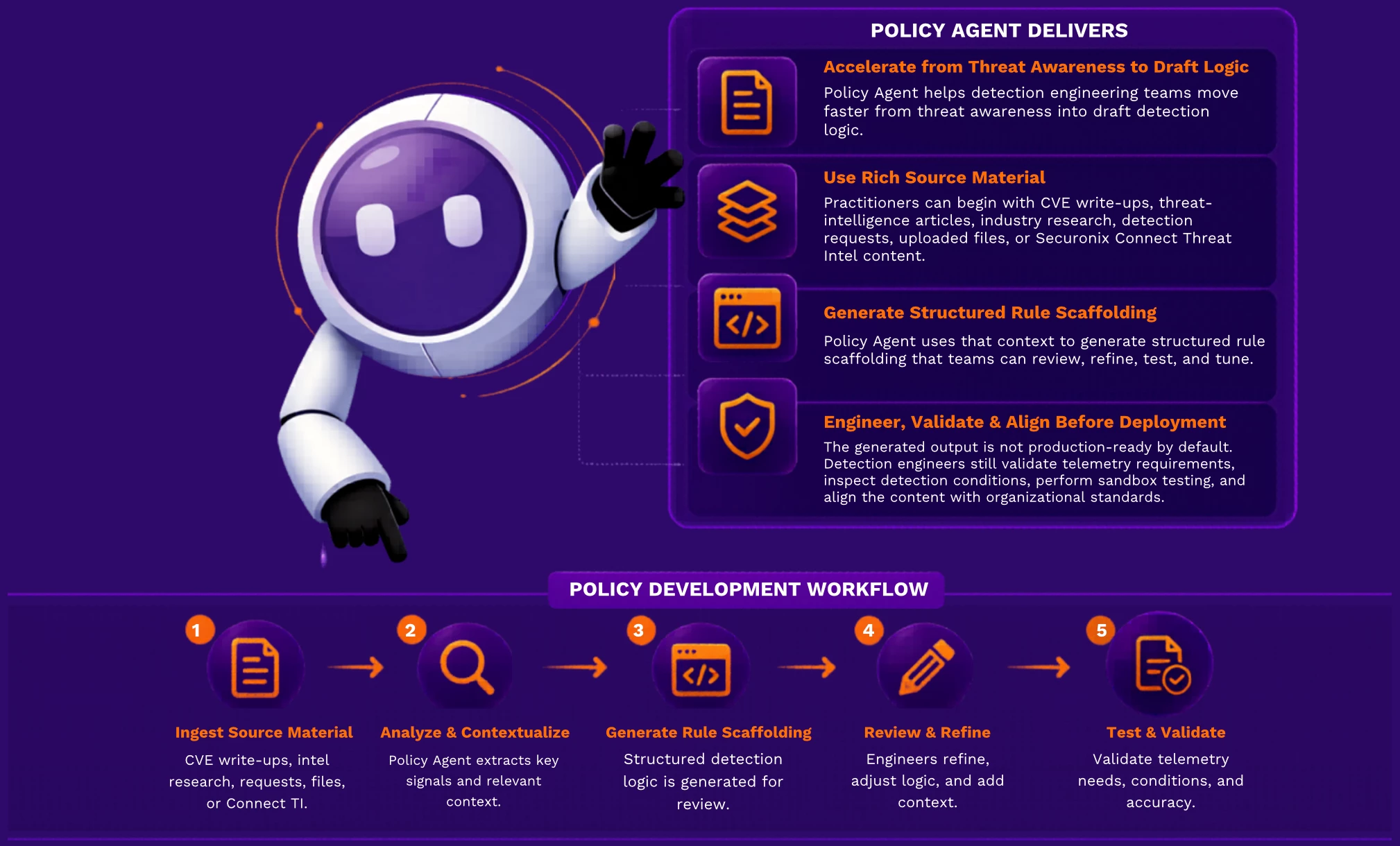
Policy Agent for detection engineering acceleration
-
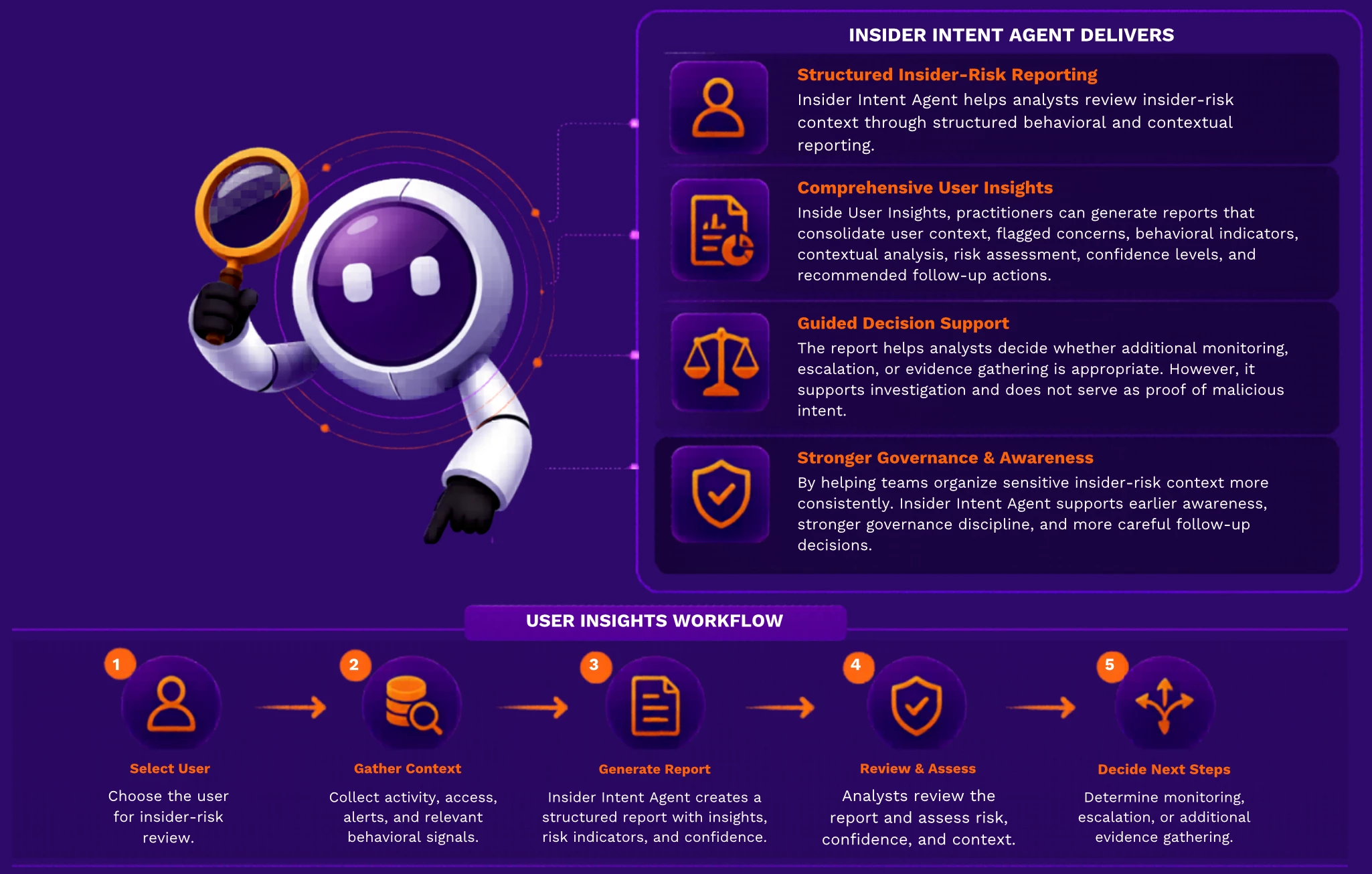
Insider Intent Agent for governed insider-risk review
Each workflow is supported by contextual evidence, explainable output, and analyst validation before action.
AI Agents
Response Agent
Search Agent
Search Insights Agent
Noise Control Agent
Policy Agent
Insider Intent Agent
Agent and Capability Overview
| Agent / Capability | Primary Purpose | Key Workflows | How to Reach | What It Does | Governance / Operational Notes |
|---|---|---|---|---|---|
| SAM / Agentic Mesh | Governed AI-assisted investigation workspace | Investigation, triage, analyst orchestration | Menu > Security Alert Center > select alert or violator > Agentic Mesh / SAM | Coordinates multiple AI-assisted workflows across investigation, search, response, noise analysis, and contextual review inside one investigation environment. | Operates as a governed investigation layer where analysts remain responsible for validation, escalation, and decision-making. |
| Response Agent | Investigation summarization and guided response | Alert triage, incident review, escalation analysis | Security Alert Center > alert or violator > Response workflow / Response Summary | Generates structured investigation summaries, chronology, MITRE ATT&CK mapping, supporting evidence, and guided recommendations to accelerate analyst understanding. | Summaries are treated as investigation guidance, not final conclusions. Analysts validate supporting evidence before acting. |
| Search Agent | Natural-language search acceleration | Investigation search, Spotter workflows, activity pivots | Menu > Spotter > Search Agent-enabled search workflow | Converts investigation-oriented natural-language prompts into usable Spotter queries while preserving query transparency and editable logic. | Analysts review, refine, and validate generated queries before execution and investigation use. |
| Search Insights Agent | AI-assisted search-result interpretation | Dense Spotter result analysis, investigation review | Menu > Spotter > run supported search > Search Insights panel/icon | Summarizes supported search results using overview sections, findings, indicators, and recommended next steps to accelerate interpretation. | Analysts validate summaries against returned records and supporting evidence before acting. |
| Noise Control Agent | Signal-quality improvement and alert-noise reduction | Policy tuning, noisy-alert analysis, false-positive reduction | Menu > Analytics > Noise Control Dashboard | Identifies recurring noisy detections, correlated policies, concentrated violator activity, and tuning opportunities to improve signal quality. | The goal is reducing low-value alerts without removing meaningful detection coverage. |
| Policy Agent | AI-assisted detection engineering | Rule creation, threat-intelligence-driven detection development | Menu > Analytics > Policy Violations > Policy Agent | Generates structured rule scaffolding from CVEs, threat intelligence, uploaded files, detection requests, or Securonix Connect Threat Intel content. | Generated logic is reviewed, sandbox-tested, tuned, and validated before production deployment. |
| Insider Intent Agent | Insider-risk investigation and contextual review | Insider-risk monitoring, user investigations, governed escalation | Menu > Analytics > Insider Intent > select user > Generate Report | Consolidates behavioral indicators, search activity, contextual analysis, risk scoring, and recommended follow-up actions into structured reports. | Reports support investigation but do not function as proof of malicious intent. Practitioners validate supporting evidence carefully. |
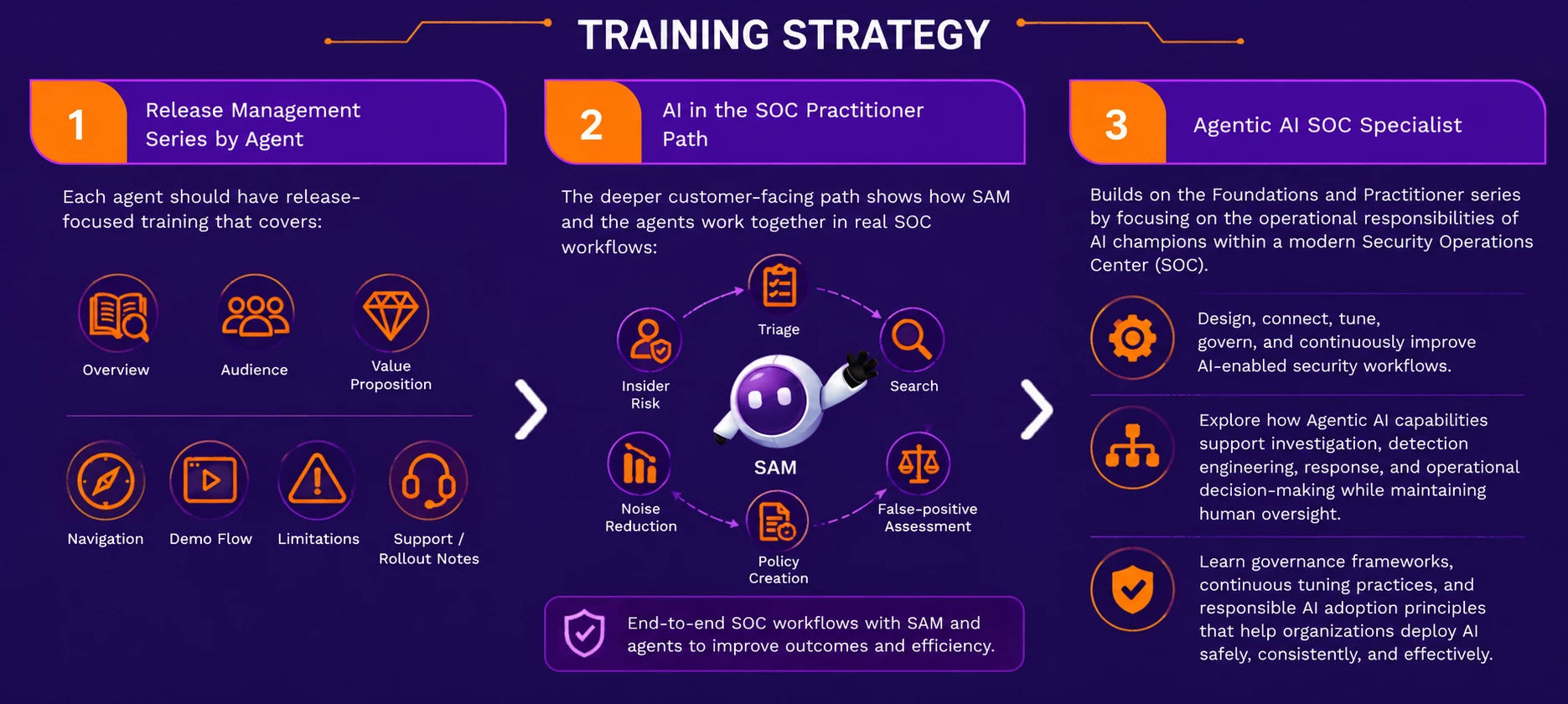
Training Strategy
Conclusion
Agentic Mesh brings governed AI-assisted workflows into the SOC through SAM and specialized agents supporting investigation, response, search, tuning, detection engineering, and insider-risk review.
Rather than replacing analysts, Agentic Mesh helps teams accelerate investigations, reduce workflow friction, and improve operational efficiency while preserving validation, explainability, and governance.
Need Help?
For help with Agentic Mesh support, supported workflows, agent access, or operational guidance, contact your Securonix Customer Success Manager, Support team, or account representative.
Additional resources are available through:
- Securonix Connect
- Official Securonix Documentation
- Agentic Mesh and SAM enablement materials